Achieving the expected solar power return on investment from solar plus battery power plants can sometimes be challenging.
One common factor involves a timing mismatch between when energy producers generate energy and when consumers need it. This misalignment can lead to two main challenges:
- Curtailment: Deliberate reduction or limitation of energy production, typically because the energy supply exceeds demand or grid capacity.
- Residual grid dependency: Businesses have a high reliance on expensive utility power during non-generation hours.
Table of Contents

To maximize the return on investment from solar energy production, we must bridge the gap between production and consumption. Businesses and utilities can use Battery Energy Storage Systems (BESS) combined with a flexible controller. These systems capture extra energy when production is high and release it when demand or prices rise.
This article explores the key technological features and strategies to consider when integrating a BESS into your solar site.
Battery energy storage systems balance supply and demand, improve reliability, and enhance the financial performance of solar sites.
1. Enhances Energy Resilience and Continuity
BESS helps mitigate the effects of solar intermittency by storing excess energy generated during peak sunlight hours and making it available when production drops, such as during cloudy weather or at night.
This capability is especially valuable in remote or off-grid locations where consistent power is essential and access to the grid is limited or unavailable. In cases where integrating BESS into your solar site is complicated, a flexible solar controller can help. It simplifies system coordination, ensures efficient energy flow, and improves overall performance. By providing a stable, on-demand energy supply, BESS reduces dependence on traditional infrastructure and enhances protection against power outages.
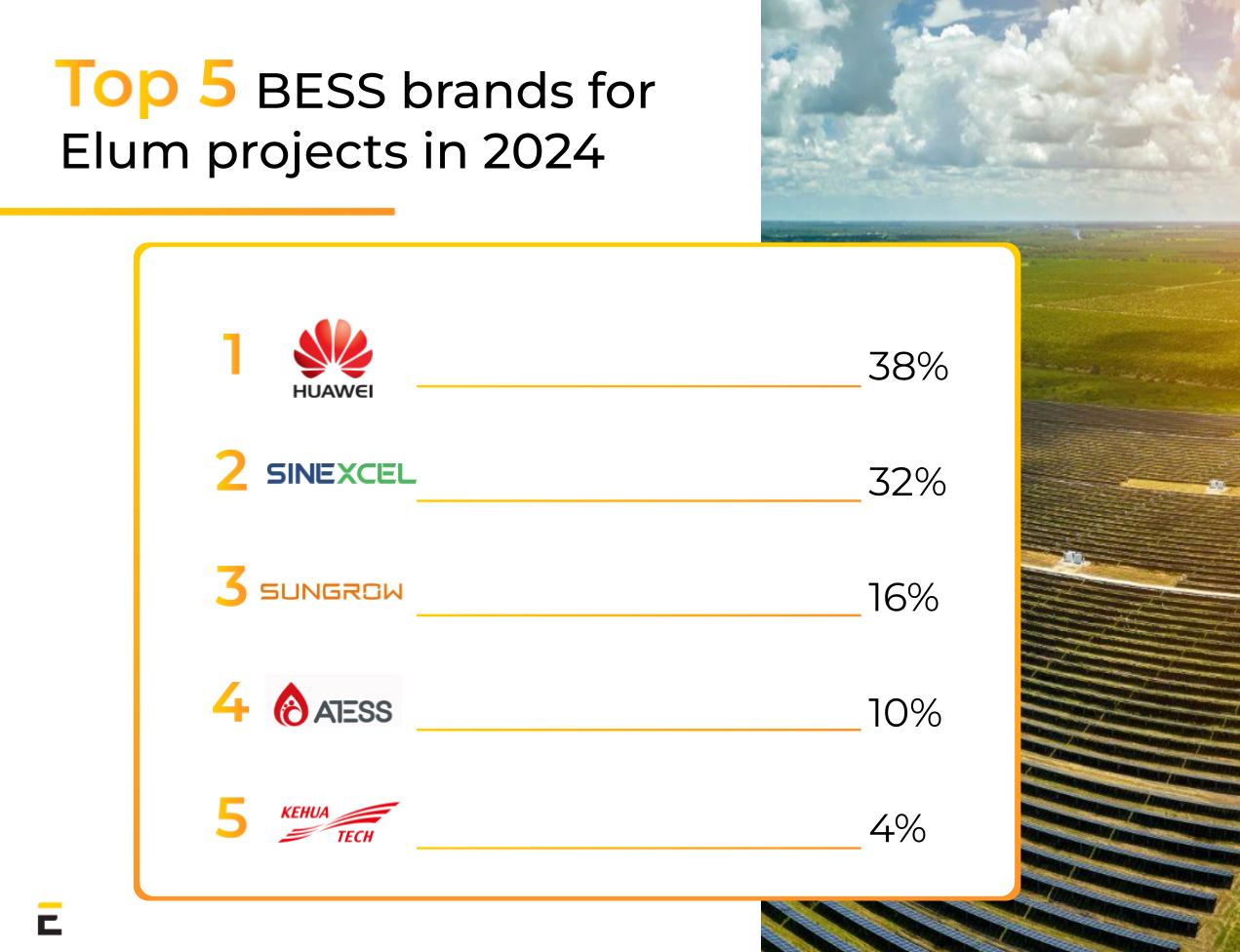
To learn more, explore our Compatibility Guide featuring the top BESS brands tested with Elum controllers.
2. Optimizes Time-of-Use and Energy Arbitrage
To fully leverage BESS for energy arbitrage, a strategic approach to time-of-use optimization is essential. By analyzing electricity pricing, whether based on utility tariffs, market signals, or contractual agreements, businesses can charge the battery when electricity prices are low and discharge the stored energy during peak price periods to offset costs.
This approach not only reduces overall electricity bills but also accelerates ROI through smarter energy dispatch and load management.
Figure: Multi-day battery charge and discharge cycles, visualized using data from ePowerMonitor, our real-time monitoring solution. The graph shows how energy is stored during low-tariff hours and released during peak demand, supporting effective energy arbitrage strategies.

Figure: Multi-day battery charge and discharge cycles, visualized using data from ePowerMonitor, our real-time monitoring solution. The graph shows how energy is stored during low-tariff hours and released during peak demand, supporting effective energy arbitrage strategies.
3. Manages Demand Charges and Shifting Loads
BESS plays a key role in demand side management by helping businesses control when and how they use electricity.
By discharging during periods of peak demand, BESS can avoid high demand charges, flatten load profiles to minimize grid stress, and shift consumption to more favorable pricing windows.
This leads to measurable cost savings and improved operational efficiency, particularly in facilities with variable or high-load operations. The discharge strategy that drives this demand charge reduction is precisely what the peak shaving method describes in detail: by capping power draw below the utility’s demand threshold during the highest-cost intervals, a BESS converts a recurring monthly penalty into one of the most predictable and quickly realized components of the overall solar power ROI calculation.
Optimizing the return on a solar investment goes beyond choosing the right storage solution; it also requires careful selection of high-performance solar technologies. Below are five key technical factors that influence long-term profitability and how BESS helps to unlock their full potential.
1. High Module Efficiency and Energy Capture Maximization
High-efficiency modules generate more electricity per square meter, making them ideal for space-constrained installations. When combined with BESS, every kilowatt-hour produced can be stored and dispatched strategically, rather than wasted or curtailed, maximizing both energy yield and value.
2. Bifacial Technology for Yield Enhancement
Bifacial solar panels capture sunlight from both the front and rear sides, increasing total generation, especially in reflective environments. BESS allows this additional yield to be stored and used during peak pricing hours, turning increased generation into direct financial gain.
3. Long-Term Reliability: Degradation and Performance Stability
Panels and batteries degrade over time. Selecting modules with low degradation rates ensures stable output over 20 or more years. BESS further supports long-term performance by delivering consistent energy during solar dips, protecting revenue through firmed output, and requiring adherence to safety protocols and preventive maintenance to avoid failure risks such as thermal events or storage degradation.
Proper sizing, monitoring, and lifecycle planning are essential for battery safety and system resilience.
4. Temperature Coefficient and Climate Adaptability
Panel efficiency declines as temperatures rise. Modules with a lower, better temperature coefficient retain higher output in hot environments. BESS helps buffer these dips by storing energy produced during cooler, high-yield periods and releasing it during low-generation phases, especially in high-temperature or variable-climate regions.
5. Multi-Busbar (MBB) Architecture for Electrical Optimization
Multi-busbar modules reduce resistance and enhance current flow, improving the overall capture of solar energy. When paired with BESS, this higher-quality energy can be preserved, time-shifted, and monetized more effectively. This results in improved financial returns across both distributed and utility-scale systems.
Efficient system integration is key to lowering the total cost of ownership in solar plus storage projects. By reducing the complexity of installation, optimizing design, and leveraging intelligent control systems, project developers can significantly improve both performance and ROI.
1. Plug-and-Play BESS for Faster Deployment
Pre-configured, plug-and-play BESS solutions streamline installation and commissioning, reducing engineering hours, cabling complexity, and labor costs. This not only accelerates project timelines but also reduces upfront CAPEX.
2. Intelligent EMS for PV-Storage coordination
Advanced EMS platforms are essential for orchestrating energy flows between solar generation and battery storage. A well-designed EMS allows for real-time monitoring, smart dispatch based on pricing signals, peak demand shaving, and improved battery lifecycle management.
3. Optimized System Design to Minimize Hardware and Maintenance Expenses
By reducing unnecessary components, simplifying maintenance, and extending system lifespan, design contributes to reduced lifetime costs and improved returns.
Regular maintenance will allow your system to operate at its full capacity. Visit the following article for more advanced insights into battery energy storage systems.
The financial case for BESS is growing stronger due to global market shifts, regulatory support, and evolving business priorities.
1. Falling Battery Prices and Market Maturity
Advancements in lithium-ion manufacturing have significantly reduced battery prices, making BESS more accessible for commercial and utility-scale projects. As a result, storage is no longer a premium add-on but a core part of optimized energy systems.
2. Incentives and Supportive Policies
Governments around the world are offering capital subsidies, tax credits, feed-in tariffs, and favorable interconnection regulations. These incentives not only reduce payback periods but also make solar plus storage projects bankable in new markets.
3. Corporate Sustainability and Strategic Energy Management
Companies are integrating BESS to meet environmental, social, and governance (ESG) targets, reduce emissions, and gain energy independence. In parallel, utilities are launching programs that reward flexible load behavior and distributed storage participation.

Maximizing solar power ROI today is about how you control, store, and monetize every kilowatt-hour.
Battery Energy Storage Systems, with the help of an EMS, can transform solar from an intermittent resource into a predictable and controllable asset with lower energy costs through time-of-use optimization and demand charge reduction, increased resilience through backup capabilities, and active participation in evolving energy markets.
As the industry shifts toward grid decentralization and dynamic pricing, the most profitable solar plus storage projects will be defined by the strategic integration of BESS, intelligent energy management systems, and advanced control technologies, including the peak shaving strategies that turn demand charge exposure into one of the most reliable contributors to overall project ROI. Reliable solar controllers, such as ePowerControl for solar plus storage, play a critical role in ensuring seamless coordination and peak system efficiency.